Showing posts with label Viktor Frankl. Show all posts

Tuesday, April 29, 2014

The Pleasure Paradox

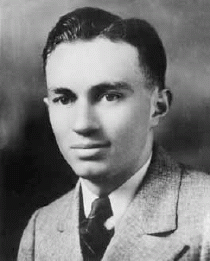
Young Gordon B. Hinckley was discouraged as a missionary in England. He wrote a letter complaining that he was doing little good and was wasting his time and money. His father, Bryant S. Hinckley, wrote blunt words that were filled with wisdom: “Forget yourself and go to work.” Elder Hinckley's response became a watershed moment. He went to his knees and promised God that he would forget himself and lose himself in the Lord’s service. Years later, after a lifetime of service, Elder Hinckley taught, “He who lives only unto himself withers and dies, while he who forgets himself in the service of others grows and blossoms in this life and in eternity” (Teachings of Gordon B. Hinckley, 588).

Jesus taught his disciples, "If you cling to your life, you will lose it; but if you give up your life for me, you will find it" (New Living Translation, Matthew 10:39). The pleasure paradox is that once we devote ourselves to pleasure, we can't get enough of it. The selfish pursuit of pleasure is like an acid, eroding relationships and ultimately eroding our souls.

I have lived long enough to watch service-centered people reap the positive benefits, including a sense of joy and accomplishment from helping others. I have also watched self-centered people taste the bitter fruits of self-indulgence. Today's tabloids are filled with former child stars who lived only for themselves. Think of Lindsay Lohan. I have great sympathy for this talented actress. My goal is not to print salacious details but to point out how difficult her life has become by living only for herself. She has been in and out of rehab and has damaged many relationships.
Justin Bieber and Miley Cyrus are other noteworthy examples of self-indulgence and slow self-destruction. We watch with sadness as these talented stars slowly spiral downward. Their destination is a table set for one. 

Viktor Frankl wrote in Man's Search for Meaning, "Happiness cannot be pursued; it must ensue, and it only does so as the unintended side effect of one's personal dedication to a cause greater than oneself or as the by-product of one's surrender to a person other than oneself." The bottom line is that pleasure is fine, but it's not the destination. Let's forget ourselves in the service of others. Ultimately, serving others can help us find ourselves and blossom in this life and in eternity.

Monday, November 4, 2013

On Weakness, Grace, and Viktor Frankl

Yesterday we discussed an important scripture in Ether 12:23-28. Here are some thoughts on these verses. Moroni was recording his feelings on the plates but was worried that future readers (the Gentiles) would mock at his “weakness in writing” (v. 23). When he wrote his words, he noticed his weakness at placing the words, and he stressed himself out thinking how others would judge him! This smacks of insecurity in the face of peer pressure. Ironically, most of that pressure was coming from an imagined audience not even born yet!

The Lord reassured him that, although fools would mock at him, “my grace is sufficient for the meek” (v. 26). Then the Lord comforted Him with this strange thought: “If men come unto me I will show unto them their weakness” (v. 27). Normally, we don’t want to see our shortcomings, but the Lord clarified to Moroni that He gave us such shortcomings so we might realize the need for help and, in our hour of need, draw closer to Him. The Lord affirmed a second time that His “grace is sufficient” (v. 27). Sufficient means enough--enough to overcome mortal weakness. In other words, His grace is big enough and strong enough for all to overcome all things. But He lists a condition: we must humble ourselves and exercise faith in Him. The result? “Then will I make weak things become strong” (v. 27).

I want to clarify that whatever challenges we now face, personal or otherwise, were not caused by God. This is a vital concept to understand! For example, during the Holocaust, some people became enraged and embittered. “How could God have caused this catastrophe?” they asked.

The answer is, “God didn’t cause this event. People caused it!”

God does give people agency, and sometimes people misuse agency, making mistakes with painful consequences. The message is not to blame God for human mistakes. Let’s do what we can to make the situation better and live for a higher cause.
 
Viktor Frankl, Wikimedia Commons.

During the Holocaust, a period when many understandably chose to become bitter, some chose a higher road and reaffirmed their ability to channel their thoughts and attitudes for a cause higher than themselves (for example, Viktor Frankl). It's interesting to me that the English spelling of his name is "Victor." He truly become a victor by looking outside himself and helping other people to find solutions to their suffering.

Christ doesn’t cause suffering, but He can direct us to solutions if we allow Him into our lives. Let’s humble ourselves and exercise faith in Christ, praying for “faith, hope, and charity,” which will bring us unto “the fountain of all righteousness” (v. 28).

Battlefields to Temple Grounds: Latter-day Saints in Guam and Micronesia

Devan Jensen and Rosalind Meno Ram, editors of Battlefields to Temple Grounds: Latter-day Saints in Guam and Micronesia , thank our readers...